The need for targetry development
The National Ignition Facility in the USA achieved a major scientific breakthrough in 2022, when laser beams were used to implode a millimetre-sized pellet of hydrogen fuel that generated 3.15MJ of fusion energy – more than the 2.1MJ of laser light used to drive the implosion.
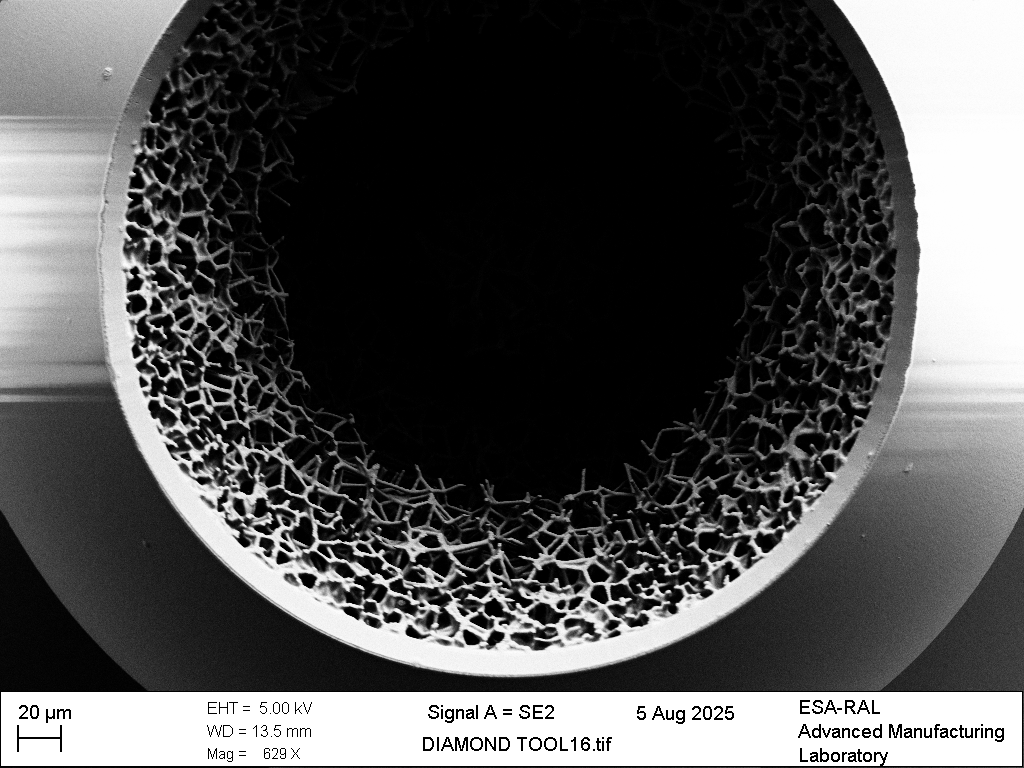
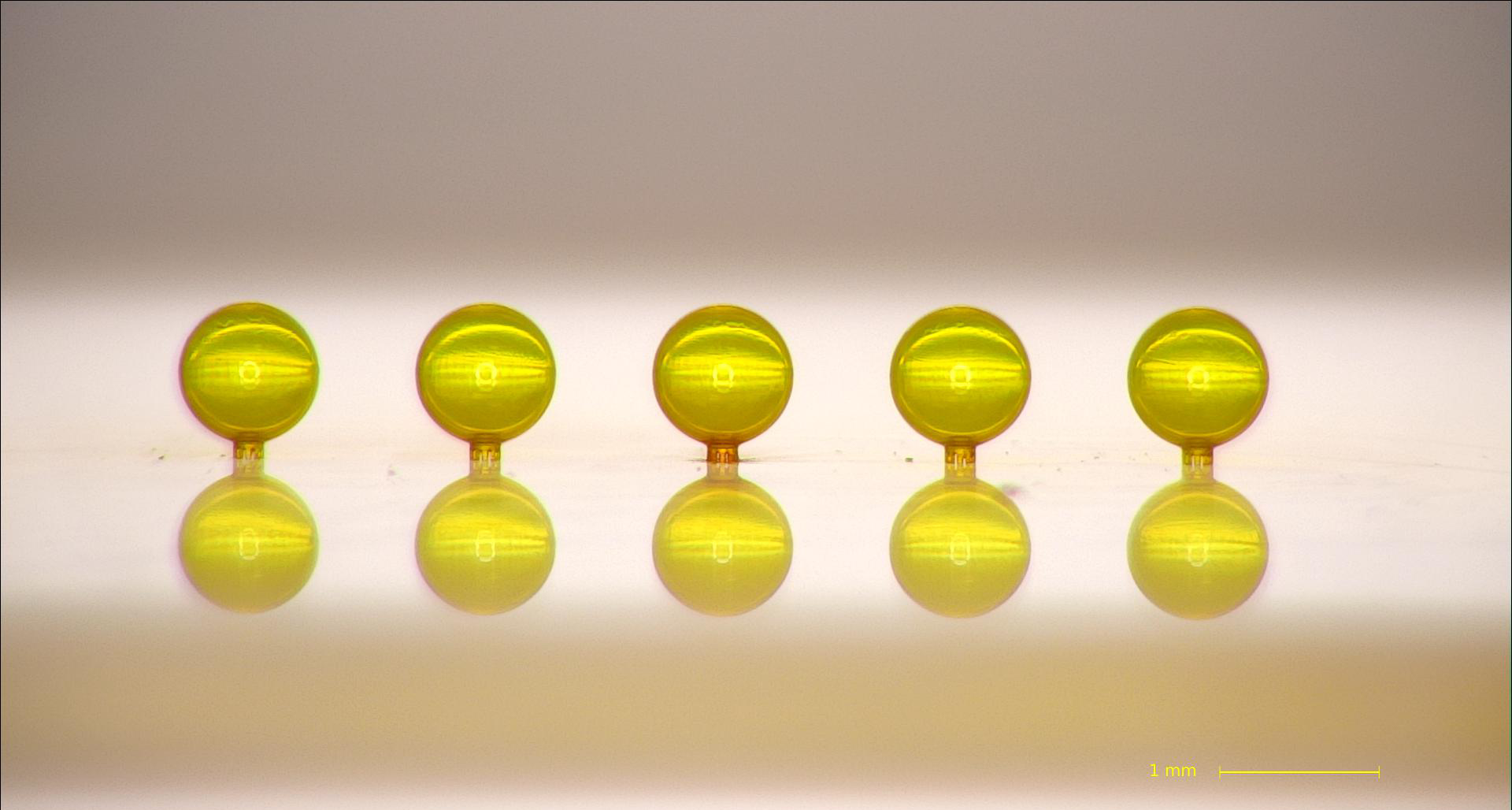
Achieving this milestone required more than a decade of research and hundreds of laser shots on exquisitely manufactured, cryogenically-cooled, spherical targets. The target that achieved the ignition breakthrough was a 2mm-diameter sphere of diamond whose outer surface was polished smoother than a mirror. The inner surface of the diamond was coated in an almost perfectly uniform, sub-millimetre layer of solid Deuterium / Tritium (DT) ice and the remaining space was filled with DT vapour. It is thought the laser targets used in a future fusion power plant will be simpler and (far) cheaper, but will need to be manufactured to a similar level of precision.
Europe currently has two major laser facilities that are capable of conducting implosion experiments – Orion in the UK and Laser MégaJoule in France. Of these, only Laser MégaJoule plans to manufacture and shoot small batches of cryogenic targets. If European fusion research is to progress within the next ten years, we will need to shoot hundreds of cryogenic targets. Looking further ahead, a working fusion power plant may consume targets at a rate of one or more times a second. If laser fusion energy is to be economically viable, the targets must be cheap and abundant.
Our aims
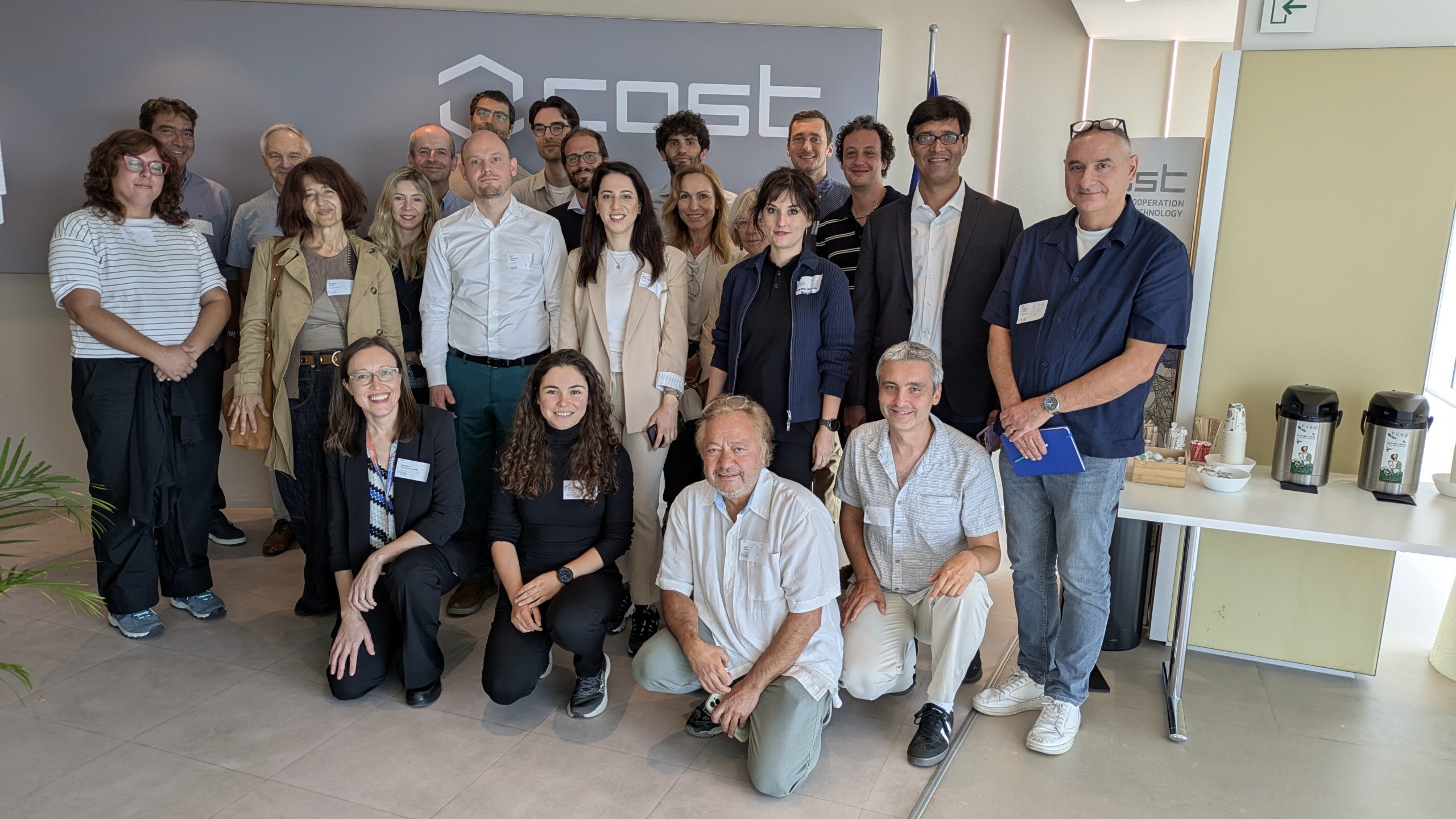
The two main aims of the ICED Cost Action are to establish a network of target fabricators across Europe and to map out a supply chain for cryogenic inertial fusion targets. It puts a particular emphasis on supporting younger researchers in the field of laser targetry, who are surpassingly rare and who possess the specialist skills that will be crucial in the development of a power plant. Money from the Action will be put towards annual conferences and a 2027 winter school. It will also provide support for individuals to conduct experiments and collaborate with foreign laboratories.
The CLF already directs significant resources towards improving laser target manufacture through its world-renowned target fabrication team and the UPLiFT project (UK Programme of Laser Inertial Fusion Technology for energy). It is hoped that the ICED Cost Action will make a useful contribution to this wider effort.